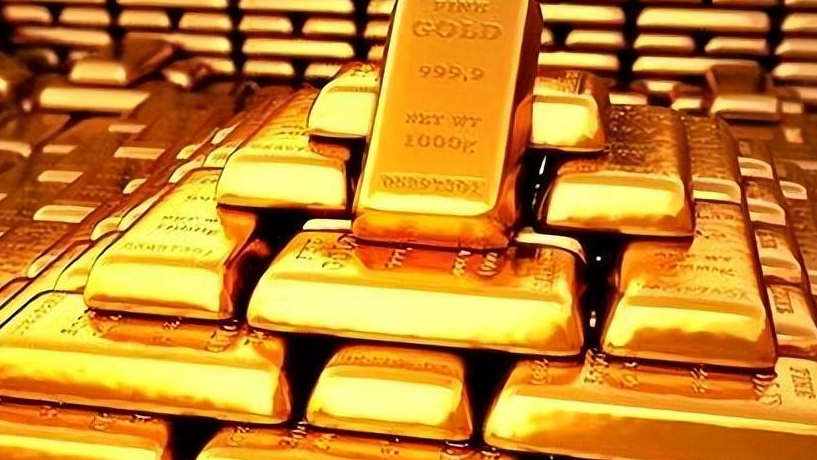
Last Friday marked a significant development in the gold market, as prices surged impressively, concluding a robust trading week on a high note. This rise occurred despite the recent U.S. employment report showing an unexpected increase of 256,000 jobs for December, which far exceeded market projections. Additionally, the unemployment rate unexpectedly dipped to 4.1%, a typical indicator of economic prosperity that often strengthens the dollar and raises interest rates—factors typically detrimental to gold prices. Yet, contrary to traditional economic logic, the gold market defied expectations and moved in the opposite direction, highlighting the complex interplay of current market sentiments and broader economic realities.
On Friday, the near-month gold futures on Comex rose by 0.9%, marking a cumulative increase of 2.4% for the week, propelling prices to a high of $2,708.50 per ounce. Silver futures also saw a notable uptick, climbing 1% on Friday and up 4.3% for the week, reaching $31.091 per ounce. Following the employment report's release, gold experienced an initial spike, accompanied by a rise in the dollar index and a notable increase in U.S. 30-year Treasury yields, which surpassed 5% for the first time in over a year. The market's multifaceted response underlines the intricate economic conditions and investor psyche that currently prevail.
Alex Ebkarian, Chief Operating Officer of Allegiance Gold, surprisingly noted, "Given such a robust employment report, the strengthening gold prices could be viewed as counterintuitive. Traditionally, strong employment data suggests a flourishing economy, which should lead to a stronger dollar and rising interest rates—both of which typically hinder gold. However, the current market reaction illustrates a pervasive sense of unease among investors. This concern focuses not merely on short-term economic data but on deeper structural issues within the U.S. economy, such as unsustainable debt levels. The continuous rise in the government debt has become a pressing concern, while market valuations have become exceptionally high, pushing various asset prices well beyond their intrinsic values. Geopolitical uncertainties, such as ongoing tensions in the Middle East and elsewhere, compound these anxieties, driving investors towards gold as a refuge and thereby propelling its price upwards."
Ole Hansen, the Head of Commodity Strategy at Saxo Bank, echoed similar sentiments, stating, "Given the generally suppressive factors of a strengthening dollar and rising bond yields, the resilience shown by gold is indeed striking. It illustrates that the price increase isn’t solely governed by one element but rather is a result of multiple forces at play. Ongoing trade war threats create uncertainty around global economic growth, impacting corporate profitability and international trade frameworks; inflation fears loom larger, especially as the global economy gradually recovers, leading some investors to gravitate toward gold as a hedge against currency devaluation; concerns regarding fiscal debts also cast a shadow, with rising deficits in major economies such as the U.S., fueling apprehensions over fiscal sustainability and heightening worries about future economic risks. Together, these factors have intensified the demand for gold as a safe-haven asset."
Currently, financial markets speculate that the Federal Reserve might enact its first rate cut as soon as June, potentially culminating the easing cycle. This expectation brings a degree of clarity regarding future monetary policy, which has somewhat stabilized market sentiment. Yet, it simultaneously poses new challenges and opportunities for gold markets.
Brien Lundin, Editor of the Gold Newsletter, remarked, "The simultaneous appearances of a strong dollar, rising U.S. Treasury yields, and increasing gold prices—all seemingly contradictory—actually underscore a growing global concern regarding the state of U.S. finances. The instability of the American financial status has become a focal point for investors worldwide, impacting both the international standing of the dollar and the stability of the Treasury market, consequently evoking fears for the global economic outlook. In light of this complex environment, gold is regarded as the 'ultimate safe haven,' showcasing its protective characteristics. Investors, whether large institutional players like central banks or individual purchasers, are flocking to gold. Despite the adverse conditions of rising yields and a strong dollar, gold's impressive performance stands out, and given current market dynamics and investor sentiment, this trend could persist. As long as uncertainties regarding U.S. fiscal conditions remain and geopolitical risks lack resolution, gold's safe-haven demand is unlikely to wane, and its prices are expected to remain firm or further escalate."